
Views: 0 Author: Site Editor Publish Time: 2026-09-01 Origin: Site


In industrial crane operations, inaccurate load positioning translates directly to compromised safety, reduced throughput, and accelerated mechanical wear. Heavy loads swinging unpredictably put personnel at severe risk on the factory floor. They also damage expensive facility infrastructure over time. As facilities move toward semi-automated and fully automated material handling, choosing the right sensor technology becomes a critical infrastructure decision. You can no longer treat this choice as a simple component swap. Precision dictates how fast you move materials safely across wide bays.
This guide evaluates absolute vs incremental positioning approaches based on power loss recovery, environmental resilience, and integration complexity. We will help your engineering teams spec the right system for your exact operational requirements. You will learn the hidden pitfalls of traditional tracking methods. You will also discover why modern automation demands exact coordinate data to function properly.
Incremental systems rely on counting pulses from a reference point, requiring time-consuming "homing" cycles after any power interruption.
Absolute positioning provides an exact, unique location value at all times, making it mandatory for automated, multi-crane runways and strict collision avoidance.
While an incremental encoder offers lower upfront CapEx for simple manual hoists, absolute systems (like Gray Bus positioning) significantly lower long-term TCO in high-duty applications by eliminating recalibration downtime.
Upgrading to absolute positioning requires verifying PLC compatibility and addressing physical mounting tolerances along the crane runway.
We must first contrast the underlying technology driving these systems. Incremental configurations count relative steps to determine movement. They measure distance from a starting location. Absolute configurations read a unique physical or digital address. They know their exact location instantly. Overlooking this fundamental difference leads to severe operational bottlenecks in busy factories.
Overhead cranes utilizing relative setups face a major hurdle known as the homing problem. They must return to a zero-point limit switch after any facility power loss. Emergency stops trigger this same frustrating requirement. Operators waste valuable production time driving the bridge back to its home position. Imagine driving a 50-ton bridge crane 300 feet down a runway just to touch a reset sensor. This delay slows down facility output significantly.
We can quantify the hidden business costs of relative tracking in heavy industry. The impacts extend far beyond simple inconvenience on the plant floor. Consider these critical operational drains:
Lost Production Time: Recalibration cycles force massive machines to sit idle. You lose profitable lifting cycles every time you reset the system.
Sensor Drift: Long runway travels introduce mechanical slip over time. The system gradually loses its true position over hundreds of trips.
Automation Limits: You cannot run advanced routing algorithms efficiently. The software cannot trust the hardware data blindly without manual verification.
These factors compound over weeks and months. They create unpredictable production schedules. They also force crane operators to manually intervene far too often.
Industrial facilities frequently deploy an incremental encoder on crane motors or wheels. These devices track hoist or bridge movement by generating electrical pulses. The control system counts these pulses to estimate distance traveled. Typically, technicians mount these units directly to the gearbox shaft. Sometimes they mount them against the bridge wheel itself.
This method remains highly viable for specific, simpler applications. You will find them useful on operator-driven Class A or B cranes. Short-span single-girder setups also benefit from this mature technology. Applications demanding strictly manual oversight work exceptionally well here. When a human operator constantly watches the load, extreme automated precision matters less. Many older facilities still rely on this legacy methodology.
However, you must consider serious implementation risks before specifying this technology today. Relative counting remains highly vulnerable to physical variables across the runway:
Wheel Slip: Metal wheels slip on metal rails during rapid acceleration. The sensor counts rotations, but the crane barely moves forward.
Mechanical Backlash: Gearbox wear introduces slop. The shaft turns slightly before moving the wheels, creating false pulse counts in the software.
Data Drift: These small errors accumulate over an eight-hour shift. The counted position drifts far away from the actual physical position.
Additionally, you cannot enforce software-based "no-fly zones" reliably. Protecting sensitive machinery requires exact location data. A drifting sensor might tell the PLC the crane sits in a safe zone. Meanwhile, the hook actually intrudes into restricted airspace. You need constant zero-point verification to prevent safety incidents.

Advanced setups maintain exact coordinates regardless of facility power states. They completely eliminate the dreaded homing cycle. The crane knows exactly where it sits the moment you restore power. It reads a fixed code or physical mark on the runway. This continuous location certainty acts as the foundational layer for modern automation.
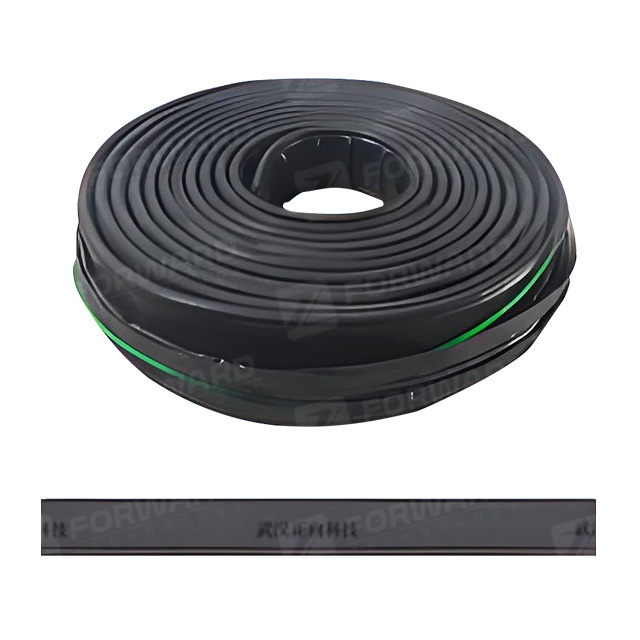
Heavy industry relies on robust methodologies to survive harsh environments. Gray Bus positioning uses inductive, slotted line systems to provide flawless data. A transmitter box rides along a customized rail. It detects magnetic fields to pinpoint its location down to the millimeter. Laser distancing also performs well across long, dusty crane runways. These specific technologies handle extreme industrial conditions without failing unexpectedly.
Reliable data enables highly advanced PLC safety functions. You simply cannot run modern logistics without them. Engineering teams leverage exact coordinates to deploy powerful automation:
Multi-Bridge Collision Avoidance: Two cranes on the same rail constantly broadcast their exact coordinates. The safety PLC decelerates them before they crash.
Tandem Lifting: You can safely synchronize two separate hoists to lift massive, awkward loads simultaneously.
Automated Storage and Retrieval (ASRS): Unmanned cranes navigate vast warehouses perfectly. They place steel coils into exact storage racks automatically.
Load Sway Control: The control system mathematically predicts pendulum motion. It adjusts bridge speed automatically to cancel out dangerous load swing.
We must acknowledge the higher initial component and installation cost here. Address-based systems demand a larger upfront financial commitment. However, you must contextualize this premium correctly. Preventing a single crane collision pays for the entire upgrade. Avoiding one major catastrophic downtime event justifies the initial expense instantly.
Engineering teams must evaluate procurement options across several critical dimensions. Environmental resilience plays a massive role in system longevity. Optical sensors often struggle with thick dust and airborne grime. Mill scale and oil quickly blind their lenses. Maintenance crews spend hours cleaning lenses instead of fixing actual mechanical problems. Conversely, ruggedized inductive systems handle extreme temperatures and heavy vibrations effortlessly. They ignore dirt and grease entirely.
Scalability remains vital for multi-crane runways. Modern safety compliance essentially requires exact tracking when running multiple bridges on one rail. You cannot prevent high-speed collisions safely using relative pulse counting alone. The risk of simultaneous sensor drift proves too high.
Consider power recovery and overall facility uptime closely. We map the technical feature of memory retention directly to operational outcomes. Exact address tracking yields a zero-minute recovery time post-power cycle. Operators resume their lifting tasks immediately.
Maintenance and calibration requirements also differ drastically. Relative setups require ongoing maintenance of limit switches. You must run zeroing routines constantly to fight drift. Advanced address-based configurations offer an "install and calibrate once" reality. They rarely need mechanical adjustments after initial commissioning.
Review the differences between positioning methods across key operational metrics.
Evaluation Metric | Incremental Pulse Counting | Absolute Address Tracking |
|---|---|---|
Power Loss Recovery | Requires full homing cycle to zero-point switch. | Zero-minute recovery. Location known instantly. |
Environmental Resilience | Prone to physical wheel slip from grease and dust. | High. Inductive methods ignore dust and fluids. |
Multi-Crane Scalability | Poor. Prone to drift, making collision zones unsafe. | Excellent. Enables strict software safety zones. |
Maintenance Burden | High. Frequent calibration and limit switch checks. | Low. Install and calibrate once upon commissioning. |
Upgrading existing runways involves notable physical realities. You face distinct retrofit risks during modernizations. You cannot simply bolt on a new sensor and walk away. Aligning barcode tape requires extremely clean, straight structural surfaces. Installing slotted inductive rails demands tight mechanical tolerances along the entire runway length. Mounting laser reflectors involves precise optical alignment across long spans. Poor physical installation ruins data integrity fast.
Control system integration presents another major hurdle. You must establish reliable fieldbus communication. You might use industrial Ethernet protocols instead. Protocols like PROFINET or Ethernet/IP pass complex coordinate data to the safety PLC. Legacy overhead cranes often lack these modern communication capabilities. You usually need to replace old contactor logic panels entirely. You will install modern variable frequency drives (VFDs) in their place.
Facility managers must also prepare for adoption friction among staff. Maintenance teams usually know how to troubleshoot simple electrical pulses. They check for voltage drops or broken wires using basic multimeters. They must now learn digital communication protocols. You will need to invest in workforce training. They must understand network diagnostics and IP addressing to keep the equipment running smoothly.
Choosing the correct configuration dictates your operational ceiling. Follow this simple decision framework to guide your technology investment. Every industrial facility operates differently.
Select relative pulse counting if your crane operates manually. Short travel distances mitigate the risk of severe sensor drift. It makes sense if facility power interruptions happen very rarely. Rigid upfront budget constraints might also force this choice. It works perfectly fine for basic lifting tasks.
Select exact coordinate tracking if your process uses semi-automated controls. It becomes absolutely mandatory when multiple cranes share a single runway. You need it to enforce strict safety zones over critical equipment. It also makes operational sense if a few minutes of downtime costs more than the sensor upgrade itself.
Audit your current downtime logs carefully as a next step. Track all delays related to sensor calibration and homing routines. Quantify those wasted hours accurately. Consult with an integration specialist shortly after. They will review your runway's mechanical tolerances to ensure a successful retrofit process.
The choice between tracking methodologies defines the true capabilities of your crane system. You must align your hardware choices with your broader production goals. Relative pulse tracking provides basic motion feedback for simple, operator-driven tasks. It struggles significantly under complex demands. Exact coordinate tracking serves as the foundational layer for modern facility safety. High-speed automation completely depends on it.
Stop letting power dips and sensor drift dictate your production schedules. Protect your personnel and machinery with reliable, constant data. Evaluate your most critical lifting zones first. Contact an engineering representative today for a comprehensive site evaluation. They will help you map out a phased upgrade plan. You can also download our technical specification sheet to explore advanced positioning upgrades for your facility. Do not settle for outdated technology when safety remains on the line.
A: We highly discourage using relative pulse counting for collision avoidance. These sensors suffer from wheel slip and mechanical backlash, causing the reported position to drift. During a power dip, they lose their location entirely. This creates a severe risk of catastrophic collision before the system can recalibrate.
A: The physical address remains permanently fixed along the runway. The sensor does not lose its location memory. Once you restore power, the PLC instantly reads the exact position. The control system knows exactly where the crane sits without moving it a single inch.
A: Mechanically mounting the new sensors is usually straightforward. However, the primary challenge lies in control system integration. Older cranes often run on legacy drives and basic contactors. You will likely need to upgrade the PLC and motor drives to accept advanced network protocols.


