
Views: 0 Author: Site Editor Publish Time: 2026-04-09 Origin: Site


Belt trippers play a critical role in automated bulk material handling. You find them distributing materials in mining facilities, agricultural silos, and large power plants. However, imprecise discharge from these mobile carriages causes severe downstream bottlenecks. Material spillage and structural collisions quickly destroy facility productivity.
Traditional tracking methods often struggle in these harsh realities. Mechanical limit switches and standard binary absolute encoders degrade under heavy vibration, electrical noise, and high-dust conveyor environments. Relying on outdated sensors introduces unacceptable operational risks. You need a smarter, more resilient way to track location along the conveyor frame.
Upgrading your infrastructure to a Gray Bus Positioning System solves this problem. It provides continuous, error-free absolute positioning. By fundamentally changing how sensor data transitions are read, you drastically reduce false faults. In this article, you will learn how this technology operates, why it outpaces traditional methods, and how it dramatically improves automation ROI.
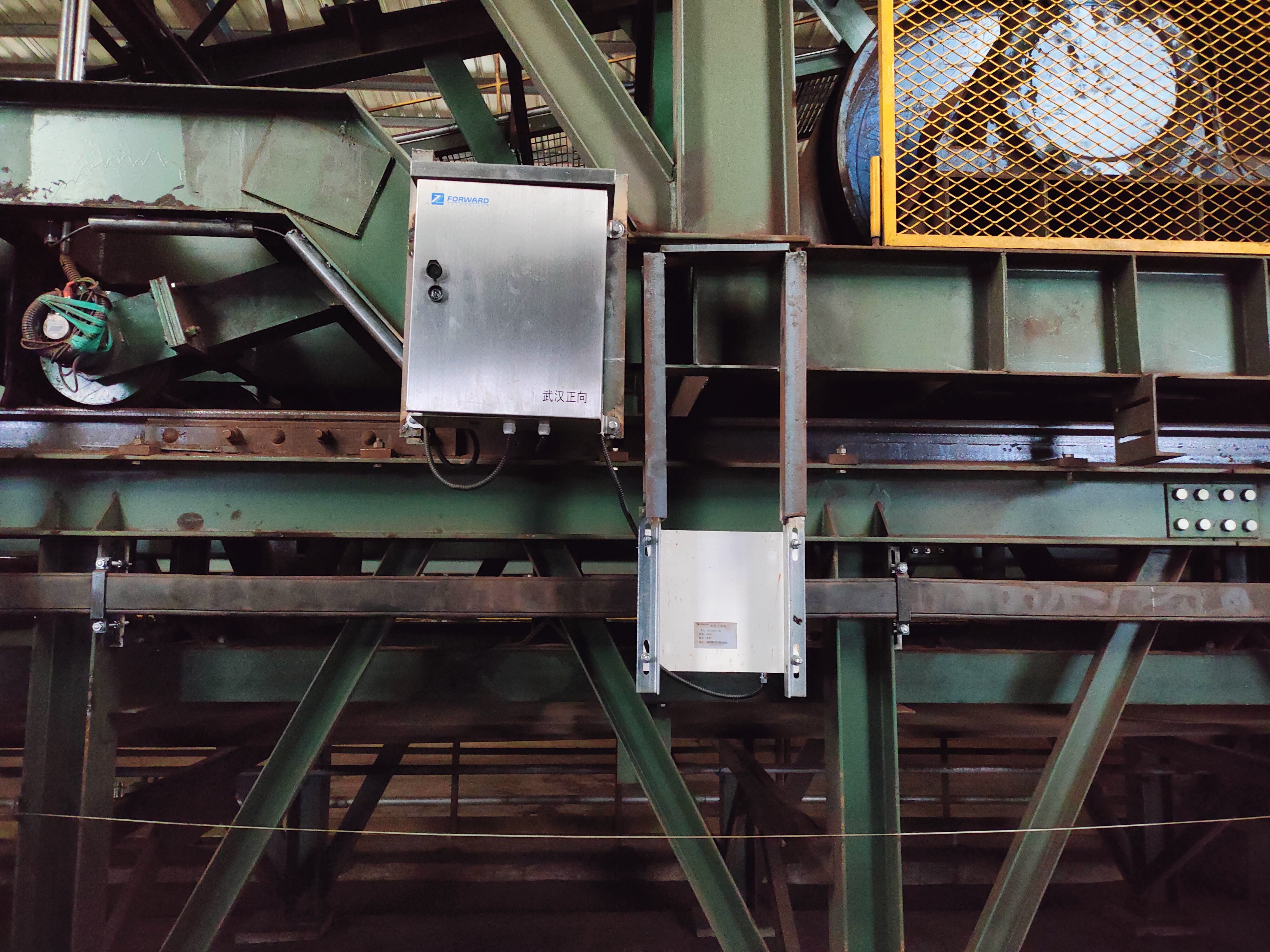
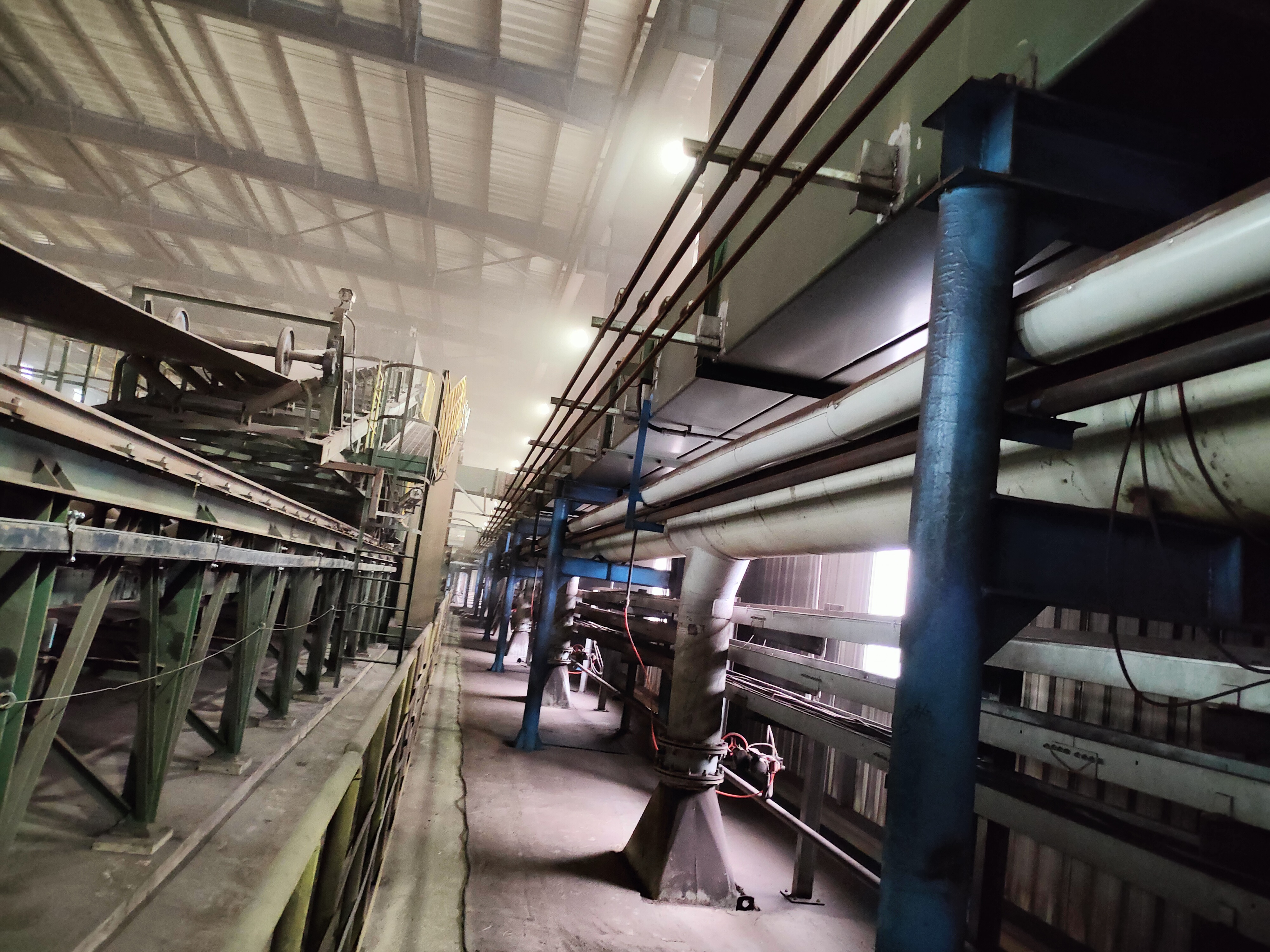
A Gray Bus Positioning System prevents catastrophic reading jumps caused by mechanical vibration by limiting data changes to a single bit per transition.
Compared to camera-based or standard binary systems, Gray code technology is highly immune to the metastable states and electrical crosstalk common in heavy industrial environments.
Equipping a Belt Tripper with Gray Code Positioning System reduces heavy multi-core cabling costs through standardized serial interfaces while ensuring continuous, precise bulk material distribution.
Transitioning requires careful PLC integration and physical track alignment but yields a significantly lower Total Cost of Ownership (TCO) by eliminating mechanical wear and false-stop downtime.
Standard positioning sensors often fail invisibly before they fail mechanically. To understand why automated heavy machinery frequently halts for no apparent reason, we must examine how sensors process movement data.
Standard binary encoders face a severe physical limitation in industrial applications. They output position data using natural binary code. When a carriage moves from one measurement step to the next, multiple data bits often must change simultaneously. Consider a concrete engineering example. Moving from position 15 (binary 01111) to position 16 (binary 10000) requires five individual bits to flip at the exact same microsecond. In a pristine laboratory, this works perfectly. On a heavy-duty conveyor, it invites disaster.
Mechanical tolerances are rarely perfect. Heavy vibration on a moving belt tripper causes non-synchronous bit readings. Sensor contacts or optical readers do not cross the transition threshold simultaneously. If your Programmable Logic Controller (PLC) samples the sensor exactly at this transition edge, it encounters a metastable state. It might read some bits as new and some as old. Instead of reading position 16, the PLC might see 11111 (position 31) or 00000 (position 0). This results in a massive, instantaneous false location jump.
These false readings translate directly into real-world operational failures. When a PLC registers a carriage jumping fifteen meters in a fraction of a second, safety protocols engage immediately. This triggers automated emergency stops. Sudden braking causes excessive mechanical wear on the carriage wheels, drive motors, and the conveyor belt itself. Furthermore, if the system does not trigger a halt, it may dump bulk material into the wrong bunker zones. This creates dangerous spillage and requires costly manual cleanup.
Solving the problem of asynchronous data reading requires a different mathematical approach to tracking movement. This is where advanced encoding frameworks prove their worth on the factory floor.
A Gray code framework operates as a "unit-distance" code. This defines a system where only one single bit changes state between any two consecutive steps. Unlike natural binary, progressing to the next integer never requires multiple simultaneous electrical transitions.
Decimal Position | Natural Binary Code | Gray Code | Bits Changed (from previous) |
|---|---|---|---|
3 | 0011 | 0010 | - |
4 | 0100 | 0110 | 3 Bits (Binary) vs 1 Bit (Gray) |
7 | 0111 | 0100 | - |
8 | 1000 | 1100 | 4 Bits (Binary) vs 1 Bit (Gray) |
This single-bit transition acts as a physical error-correction mechanism. Because only one value flips at a time, positional ambiguity is strictly limited. The maximum potential error is exactly ±1 Least Significant Bit (LSB). Even during severe machine vibration or slow-speed micro-movements, the system cannot output a vastly incorrect position. If the PLC samples data precisely on the dividing line between position 7 and 8, it will read either 7 or 8. It will never read an impossible distant number. This eliminates "ghost" jumps entirely.
Industrial conveyor tracks run alongside massive, high-voltage motor drives. These drives generate intense electromagnetic interference (EMI). Limiting bit transitions naturally reduces electrical crosstalk and logic glitches on the sensor line. Fewer electrical state changes mean a quieter, more stable signal profile. This noise suppression is a crucial factor when deploying a Belt Tripper with Gray Code Positioning System in facilities reliant on massive power draws.
Plant engineers often face a crowded market of positioning technologies. Understanding how different sensors respond to heavy industrial realities is vital for successful automation.
Vision-guided camera systems offer impressive 2D and 3D tracking capabilities. They excel in clean manufacturing environments. However, they rapidly fail in bulk material handling. The high-dust, low-visibility environments typical of mining tunnels or grain silos easily obscure camera lenses and optical targets. Gray bus systems, particularly those using inductive non-contact rails, completely ignore airborne dust, smoke, and moisture.
Limit and position switches represent the oldest tracking technology. They rely on heavy physical contact to trigger a signal. Unfortunately, they only offer discrete point-in-time feedback. They tell you when a carriage enters or exits a specific zone, but they offer zero visibility into the spaces between zones. A Gray bus positioning system utilizes slotted optical or inductive rails to provide continuous, absolute tracking across the entire conveyor span. You always know exactly where the carriage is.
While standard absolute encoders provide continuous tracking, they still suffer from the data reliability gap mentioned earlier. Some system integrators attempt to fix binary read errors using complex software filtering. This adds computational latency to the PLC. Gray code technology provides an inherent physical safeguard. It corrects the error at the physical hardware level before the data ever reaches the logic controller.
Technology Type | Vibration Tolerance | Dust/Debris Immunity | Positioning Type | Maintenance Need |
|---|---|---|---|---|
Mechanical Switches | Low | Medium | Discrete (Zonal) | High (Wear & Tear) |
Vision/Camera Systems | Medium | Very Low | Continuous 2D/3D | High (Cleaning) |
Standard Binary Encoders | Low (Prone to jumps) | High (If sealed) | Continuous Absolute | Medium |
Gray Bus Positioning | Very High | Very High | Continuous Absolute | Very Low |
Transitioning from legacy sensors to advanced absolute positioning requires capital investment. However, the business case becomes clear when you evaluate the Total Cost of Ownership (TCO) across the conveyor's lifecycle.
Legacy parallel output encoders demand an individual wire for every data bit. A 13-bit resolution sensor requires an expensive, thick 14-core cable. Over a 300-meter conveyor run, this cabling becomes incredibly heavy, costly, and prone to internal wire breakage. Gray bus systems shift this paradigm. They utilize standardized serial interfaces like Synchronous Serial Interface (SSI), BiSS, or modern industrial fieldbuses. This reduces the connection to a simple 4-wire or Ethernet cable. You drastically reduce cabling material costs and installation labor.
Facility downtime is arguably the highest hidden cost in material handling. Every time a conveyor triggers a false system halt, operators must execute manual reset protocols. Production stops. Upstream crushers or loaders must idle. By eliminating the "ghost" position errors that cause these halts, plants recover hundreds of hours of lost production time annually. The ROI often justifies the upgrade cost within the first two financial quarters.
Continuous, error-free positioning allows for highly optimized motion profiles. The PLC can command the tripper carriage to accelerate smoothly and decelerate gracefully before reaching a discharge zone. Highly accurate, non-contact positioning prevents physical micro-collisions. It completely eliminates harsh emergency braking events. This drastically extends the lifecycle of the tripper carriage wheels, drive gears, and the primary conveyor belt infrastructure.
Despite the robust nature of the data transmission, successful deployment requires strict adherence to engineering best practices. Be aware of these common rollout challenges.
Installing the physical reading tracks or inductive rails poses a distinct mechanical challenge. Heavy-duty conveyor frames often warp, sag, or shift due to massive load changes. While the sensor data logic is flawless, the physical gap between the sensor head and the track must remain within operational tolerances. Achieving precise initial mechanical alignment along a warped 200-meter span requires specialized mounting brackets and experienced installation technicians.
Software configuration catches many integrators off guard. Gray code does not behave like standard arithmetic binary. A common mistake occurs when engineers extract only partial lower bits of a sequence to save memory space. This is known as "Excess Gray code." When the value surpasses the maximum limit of those extracted bits, the sequence will reverse itself rather than neatly overflowing back to zero. Your PLC logic must proactively account for this mathematical reflection to avoid reverse-tracking errors.
You must specify the correct sensor form factor based on the materials you process. Agricultural operations conveying combustible grain dust should select fully potted inductive Gray bus sensors to comply with explosion-proof (ATEX) standards. Conversely, facilities handling wet metallic ore might rely on specialized enclosed optical variants. Always match the ingress protection (IP) rating to the chemical and physical realities of your specific plant.
Moving from a reactive maintenance posture to a fully autonomous setup requires a structured approach. Engineering teams should follow these specific steps to begin the transition.
Audit the Existing Infrastructure: Conduct a baseline analysis of your current tripper system. Document the frequency of false-stops, the volume of material spillage, and the annual budget spent on mechanical wear replacements over the past two years.
Specify Communication Protocols: Define your existing industrial network architecture. Determine whether your plant backbone runs on CANopen, Profibus, PROFINET, or EtherNet/IP before selecting a sensor vendor. Native protocol compatibility minimizes integration headaches.
Pilot Testing: Do not overhaul the entire facility at once. Implement a single-track Gray code (STGC) setup on your highest-failure conveyor section. Use this proof-of-concept to validate PLC programming and mechanical mounting resilience before committing to a facility-wide rollout.
Reliable automated bulk material handling absolutely requires positioning data that refuses to degrade under heavy vibration, airborne dust, or aggressive electrical noise.
A Gray bus positioning system mathematically limits readout errors to a single minimal step, preventing the catastrophic location jumps that cripple standard binary setups.
Moving to serial-based communication drastically reduces your cabling infrastructure costs across long conveyor spans.
Consider this upgrade a foundational requirement. It is the necessary bridge to move your facility from semi-automated, human-monitored discharging to fully autonomous, high-efficiency material routing.
Take action by consulting with an experienced systems integrator. Map out your cable runs, confirm your PLC protocol compatibility, and design a pilot test for your most problematic belt tripper line.
A: Incremental encoders measure movement by counting pulses from a starting point. They lose their position entirely upon power loss and require a time-consuming physical homing routine upon restart. Gray bus systems provide absolute positioning immediately upon startup. They safely resume autonomous operations without any need for manual recalibration.
A: Yes. By utilizing advanced serial data transmission protocols (like SSI, BiSS, or industrial Ethernet) rather than outdated parallel outputs, Gray code systems can reliably transmit accurate positional data over hundreds of meters. This minimizes cable degradation and eliminates signal voltage drops.
A: Rarely. Most modern industrial PLCs natively support built-in Gray code-to-binary conversion blocks. If you use older hardware, the mathematical conversion is usually handled directly by the sensor's onboard communication module. It delivers standard, ready-to-read integer data to your existing PLC network.


