
Views: 0 Author: Site Editor Publish Time: 2026-04-16 Origin: Site


Unmanned stacker reclaimer operations require highly precise spatial data to function safely. Even minor deviations in traveling or slewing logic cascade into severe bulk material spillage, equipment skewing, or catastrophic structural collisions. In harsh yard environments, legacy position tracking methods struggle immensely. Incremental encoders and limit switches constantly battle wheel slip, heavy dust interference, and rapid mechanical wear. Achieving reliable automation and 3D material tracking requires shifting away from these older methods. You must upgrade to absolute, non-contact technologies, specifically integrating a robust Gray Bus Positioning System. This transition fundamentally changes how machines navigate complex stockyards. This article provides a realistic evaluation of position detection technologies available today. We outline how absolute positioning directly impacts your facility's throughput, extends overall equipment lifespan, and makes true automation feasible. Read on to discover how exact coordinates protect your critical bulk material handling infrastructure.
Automation Prerequisite: Reliable position detection is the foundation of 3D stockyard modeling and unmanned operation; without exact coordinates, PLC automation logic cannot function safely.
Overcoming Environmental Variables: Harsh yard conditions (dust, rain, temperature fluctuations) degrade traditional sensor accuracy, making non-contact absolute positioning critical.
Error Elimination: Addressing the limitations of wheel-slip and mechanical wear inherent in standard rotary encoders when tracking long-travel movements.
TCO Reduction: Upgrading to a Gray Bus Positioning System lowers total cost of ownership by preventing collision-induced downtime and eliminating routine sensor recalibration.
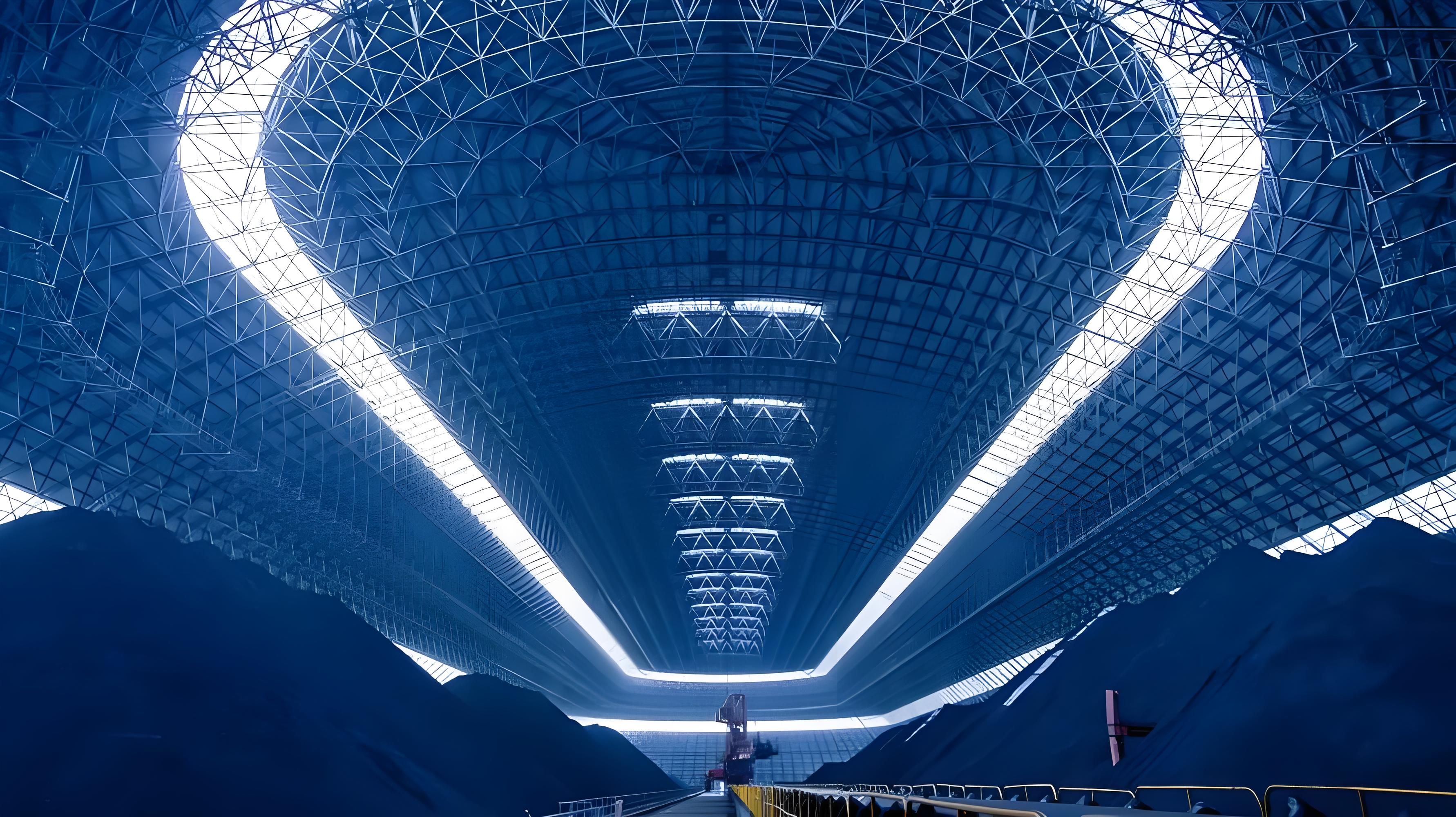
Position drift silently cripples bulk material handling efficiency. When a machine loses its exact coordinates, it inevitably chooses sub-optimal drop-off points. This spatial confusion leads directly to material spillage across the yard. Spilled product accelerates steel corrosion, blocks structural pathways, and demands costly manual cleanup. Furthermore, poor positioning causes conveyor cascade logic failures. If the central system cannot verify where the stacker sits, sequential starting and stopping of conveyors breaks down. Operators must intervene manually. These manual intervention delays disrupt continuous material flow and slash daily throughput.
Accurate positioning acts as the primary shield against structural disaster. Heavy machinery operating on the same rail track poses a massive risk. You need precise coordinate data to enforce strict, automated safety zones. For example, reliable systems trigger a 10% deceleration when two machines come within 40 meters of each other. If the gap closes to 30 meters, the PLC initiates an emergency stop. Without exact spatial awareness, these safety protocols either fire too late or trigger false alarms. False alarms tempt operators to bypass safety systems, which drastically increases the risk of machine-to-machine collisions.
Modern bulk terminals increasingly rely on digital twin technology for inventory management. Creating this digital replica requires calculating accurate forward kinematics. You treat the stacker reclaimer essentially as a massive robotic arm. It features long-travel, slewing, and luffing axes. To track material flows accurately, this robotic arm needs real-time, error-free coordinate inputs. When you supply perfect data, the digital twin can track material drop-offs within ±0.1m accuracy. This granular tracking allows facilities to manage stock aging, prevent coal spontaneous combustion, and automate reclaiming sequences perfectly.
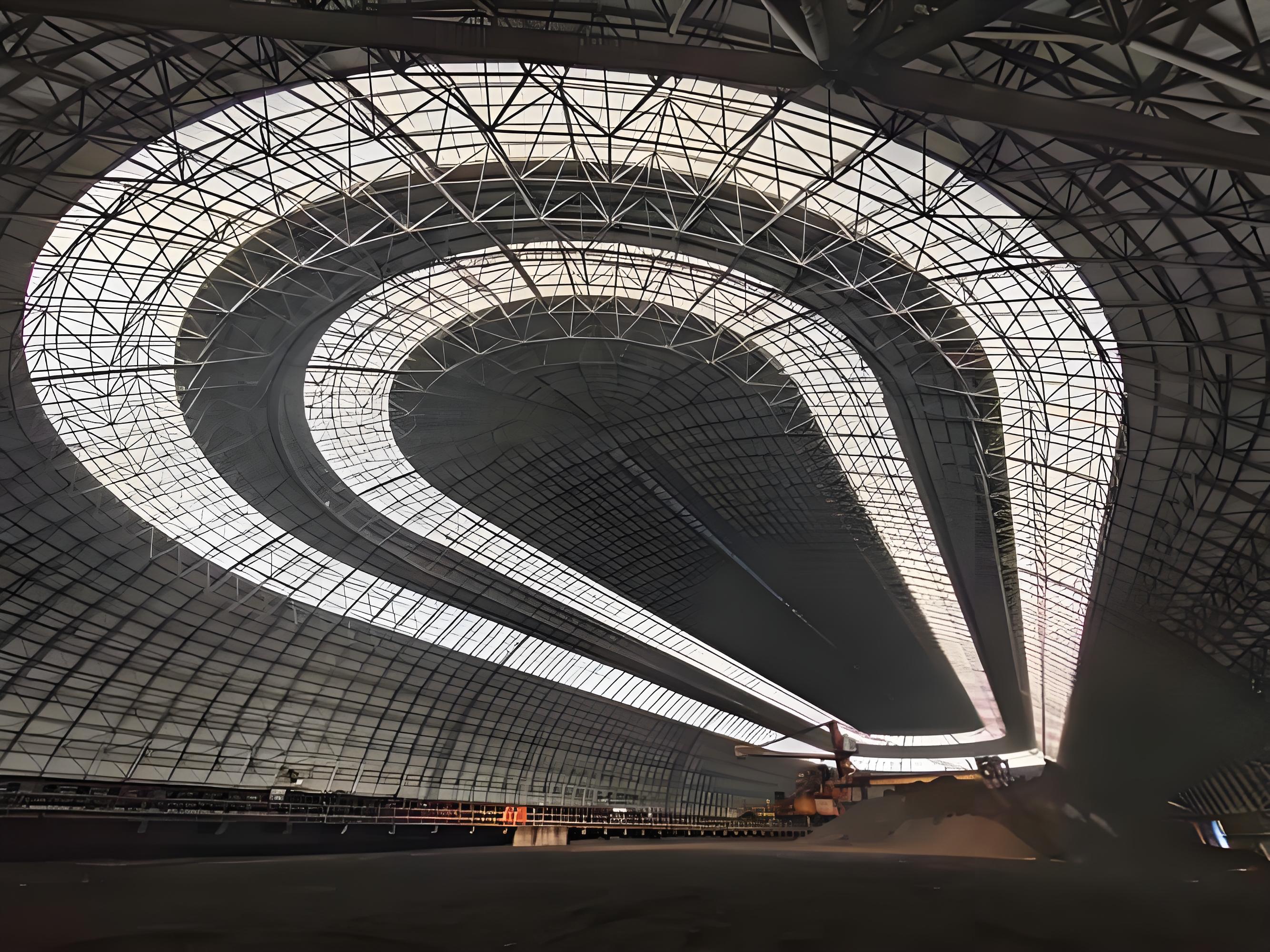
Choosing the right Stacker Reclaimer Position Detection System defines your automation success. Different technologies offer varying levels of reliability in harsh environments. Below is a realistic evaluation of the three primary approaches.
Many legacy facilities still rely on rotary encoders combined with RFID tags. This baseline approach offers familiarity and a very low initial hardware cost. Maintenance teams understand how to replace them quickly. However, the cons heavily outweigh the pros in automated setups. Encoders remain highly vulnerable to accumulated errors. Track wear, wheel slip, and mechanical vibrations distort the distance readings constantly. To compensate, facilities must engineer complex redundancy. They often pair stroke encoders with RFID tags every 20 meters just to force manual coordinate corrections. This constant recalibration defeats the purpose of true automation.
Satellite and radar-based positioning represent a step up in technology. The main advantage is their ability to handle open-sky tracking and assist in 3D yard profiling. They work well in clear, unobstructed environments. Yet, they face severe environmental challenges. Heavy steel structures easily degrade satellite signals. Severe weather, dense fog, and airborne coal dust blind radar systems unpredictably. Most importantly, these wireless systems suffer from inconsistent update rates. High-speed dynamic braking requires instant, guaranteed data transmission, which GNSS cannot reliably provide under a massive steel boom.
For ultimate reliability, industrial operators turn to Gray Bus technology. This system provides continuous, absolute position data completely without physical contact. It remains entirely immune to dust storms, rain, wheel slip, and wireless signal loss. It consistently delivers the millimeter-level accuracy required for automated slewing (rotational alignment) and long-travel positioning. The only notable drawback is the installation process. It involves higher initial installation complexity compared to bolting on basic limit switches. However, this upfront effort guarantees decades of maintenance-free accuracy.
Technology | Primary Strength | Primary Weakness | Suitability for Automation |
|---|---|---|---|
Rotary Encoders + RFID | Low initial component cost | Wheel slip causes severe coordinate drift | Low (requires constant manual correction) |
GNSS / Radar | Good for open-sky 3D profiling | Signal blocked by steel; dust interference | Medium (unreliable for safety braking) |
Gray Bus System | Absolute, non-contact millimeter accuracy | Higher initial installation complexity | High (ideal for unmanned operations) |
| Parameter | Specification |
|---|---|
| Resolution | 1 mm |
| Measurement Length | Customized |
| Gap Between Antenna Box and Grey Busbar | Front/Rear: 30–300 mm; Up/Down: ±100 mm |
| Data Communication Interfaces | RS232C, RS485, Modbus, Modbus RTU, Profibus, Profinet, DeviceNet, Ethernet (TCP/IP protocol, RJ45 interface), SSI, etc. |
| Operating Environment | Suitable for harsh industrial environments such as outdoor conditions with dust, acids and alkalis, and high temperatures. |
Stacker reclaimers move in three degrees of freedom (3-DOF). Controlling each axis requires specific spatial data handling:
Long Travel: The system tracks hundreds of meters of movement along the rail. Because it relies on the stationary cable rather than friction-dependent wheels, it completely eliminates skewing risks and distance miscalculations.
Slewing Alignment: Rotating the massive boom requires perfect angular data. Absolute positioning ensures the boom aligns perfectly relative to the yard layout and existing 3D stack models.
Luffing Control: Vertical pitch control determines drop height. Integrating accurate position data prevents the boom from crashing into the stockpile while minimizing dust generation during drop-off.
Accurate sensors hold no value if the control system cannot read them instantly. The Gray Bus architecture interfaces seamlessly with existing motor control centers (MCCs) and programmable logic controllers (PLCs). It utilizes standard industrial protocols like DeviceNet, Profibus, or PROFINET. This direct, high-speed network integration enables dynamic braking. When the position system detects a safety boundary, it executes logic instantly. The PLC receives the exact coordinate, processes the deceleration algorithm, and cuts motor power in milliseconds.
Standard mechanical sensors drain maintenance budgets heavily. Technicians spend countless hours replacing worn encoder wheels, cleaning optical lenses, and recalibrating systems after mechanical tension loss. Contrast this reality with the wear-free nature of the Gray Bus cable. Because the antenna never touches the cable, physical friction ceases to exist. You eliminate routine sensor replacement entirely. This non-contact design dramatically lowers total cost of ownership over a typical 15-year equipment lifecycle.
Confident, absolute positioning transforms operational speed. When operators or PLCs trust the machine's exact location, they can run the stacker reclaimer continuously at higher speeds. You no longer need to program overly cautious, slow-down buffer zones to account for encoder drift. The machine moves swiftly from point A to point B. By eliminating manual repositioning buffers and reducing machine waiting time, facilities often see double-digit percentage increases in overall bulk material throughput.
We often overlook the financial value of disasters that never happen. Avoiding just one major structural failure or collision event justifies the system's entire cost. When mechanical sensors fail or drift, they trigger nuisance safety alarms in the PLC. Frustrated operators frequently force the cancellation of these safety alarms to keep production moving. This dangerous habit leads directly to catastrophic boom collisions or derailed chassis. Reliable position data stops this cycle. It prevents forced alarm overrides by ensuring the PLC only stops the machine when a genuine hazard exists.
Installing advanced position detection on older machines presents unique physical challenges. Legacy stacker reclaimers often suffer from warped structural tolerances and misaligned rails. You must manage these physical deviations carefully during a retrofit. Aligning the gray cable alongside existing rails requires custom mounting brackets. Engineering teams need to survey the track to accommodate ground settling and thermal expansion. Despite these hurdles, a well-planned retrofit breathes new life into decades-old machinery, instantly preparing it for modern software control.
Bulk stockyards represent some of the most unforgiving industrial environments on Earth. Any integrated hardware must survive extreme conditions. System components require strict IP67 or IP68 ingress protection ratings to block out microscopic coal or iron ore dust. If your facility operates at a port terminal, the equipment needs specialized coatings for resistance to high-salinity marine environments. Furthermore, temperature resilience is non-negotiable. The hardware must perform flawlessly from freezing winters at -40°C to scorching summer operations reaching +85°C.
No safety system should operate in total isolation. While Gray Bus technology provides flawless absolute positioning, compliance standards require defense in depth. We strongly advise maintaining supplementary safety layers. Keep your mechanical limit switches installed at the absolute physical ends of the track. Integrate ultrasonic sensors on the boom tip to detect sudden stockpile avalanches. These secondary devices act as the ultimate physical boundaries. They satisfy stringent industrial safety compliance standards while the primary absolute system handles all complex automation logic.
True automation remains entirely impossible if the central control unit cannot trust the machine's physical coordinates. Relying on friction-based sensors in dusty, harsh environments guarantees process instability. Upgrading your tracking infrastructure directly solves the root causes of material spillage, collision risks, and automation logic failures. Position detection is not just a minor sensor upgrade; it is the critical enabler for efficiency and safety in modern bulk material handling.
To move forward, technical buyers should immediately audit their current long-travel positioning error rates. Track how many times operators manually reset coordinates each week. Next, consult with integration specialists to map out a Gray Bus retrofit tailored to your specific rail layout. Securing absolute spatial data today will safeguard your heavy equipment and maximize your throughput for decades to come.
A: Traditional encoders rely on a physical wheel rolling along the track. In harsh yard environments, dust, rain, and ice cause this wheel to slip. Over hundreds of meters, these tiny slips accumulate into massive coordinate drift. Additionally, mechanical wear degrades the sensor's physical parts over time.
A: It is a non-contact, absolute inductive positioning technology. An antenna box on the moving machine reads a stationary, cross-linked cable along the track. Because it uses electromagnetic induction instead of physical contact or optical lenses, it remains completely immune to dust, weather, and environmental interference.
A: Yes, absolutely. It provides exact, real-time distances between machines to the PLC. This exact data allows the control system to enforce rigid, automated safety zones, triggering precise deceleration and emergency stops well before a physical collision can occur.
A: It is highly manageable if planned correctly. The system architecture offers standard industrial protocol compatibility, including DeviceNet, Profibus, and PROFINET. This ensures seamless communication with your existing motor control centers and PLCs, causing minimal disruption during the retrofit process.


