
Views: 0 Author: Site Editor Publish Time: 2025-10-20 Origin: Site


Port cranes are the core equipment for terminal loading and unloading operations, and their evolution is deeply intertwined with global trade, increasing vessel sizes, and the rise of containerization.
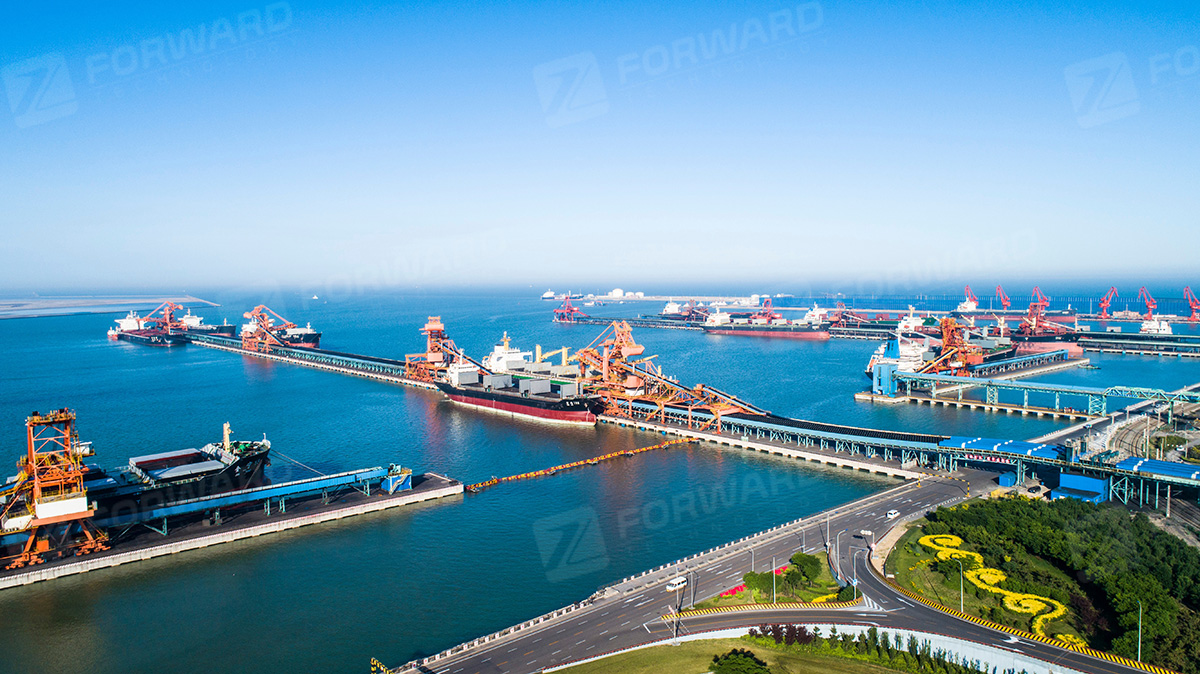
A Brief History of Port Crane Evolution
I. Early Stages (Late 19th Century - Mid-20th Century):
Relied heavily on manual labor, winches, pulley systems, and simple fixed cranes. Efficiency was extremely low, resulting in long port stays for vessels. Early steam-powered and later fixed electric cranes emerged but saw limited application.
II. The Rise of Portal Cranes (Early 1900s - 1960s):
Portal Cranes became the mainstream. Initially steam-powered, later electric, they offered slewing, luffing, and hoisting capabilities, covering both ship holds and quay areas. They were versatile for general cargo (bags, barrels, timber, steel) but had relatively low efficiency, difficulty handling ship hatches, and limited capacity for large, heavy items.
III. Increasing Ship Size & Specialization (1950s-1960s):
Growing vessel tonnage highlighted the efficiency limitations of traditional portal cranes. Bulk cargo transport spurred the development of continuous, high-efficiency equipment like ship loaders and unloaders. The need for faster general cargo handling intensified.
IV. Revolutionary Breakthrough: Containerization & the Birth of STS Cranes (1956-1970s):
Malcolm McLean's "Ideal X" completed the first commercial container voyage in 1956, sparking the containerization revolution. This created a demand for specialized equipment to handle massive volumes of standardized containers efficiently. The Ship-to-Shore (STS) Gantry Crane was born: the first true STS crane was designed and built by Paceco in 1959. Its high frame spans the ship and quay, the crane travels on rails, and its boom can be raised/lowered to accommodate different vessels. Specialized spreaders evolved from rope hooks to twistlocks. STS cranes dramatically boosted efficiency (from tons per day to hundreds of containers per day), becoming the symbol of modern container ports. Their design philosophy set the foundation for modern large-scale cranes.
V. Yard Equipment Evolution (1970s - Present):
Soaring container volumes drove the need for efficient yard equipment.
Rubber-Tired Gantry Cranes (RTG): Emerged in the 1970s, their mobility and lower foundation requirements made them mainstream yard cranes
Rail-Mounted Gantry Cranes (RMG): Appeared around the same time or slightly later. Their high precision, lower energy consumption, greater stacking ability, and suitability for automation made them the preferred choice in large, specialized, and especially automated terminals.
VI. Automation & Intelligence Wave (1990s - Present):
The pursuit of higher efficiency, safety, and lower operational costs fueled port automation.
Twin-lift and split-hoist STS cranes improved quay-side efficiency.
Automated RMGs (ARMG) became the core of automated yards.
Automated Straddle Carriers (ASC) and Automated Guided Vehicles (AGV/ALV) were deployed for horizontal transport.
Key Enabling Technologies: High-precision positioning (e.g., Gray Code, laser scanning), intelligent scheduling systems, remote monitoring/operation, and AI optimization.
VII. Adapting to Mega-Vessels (2000s - Present):
To serve Ultra-Large Container Vessels (ULCVs) exceeding 20,000 TEUs, STS cranes evolved to be taller (hoist height 50m+), reach further (outreach 70m+), become more powerful (twin-lift/dual-trolley), and smarter. RMG stacking capabilities also increased.
In summary, port cranes have evolved from manual/steam-powered portal cranes to specialized STS and yard equipment (RTG/RMG) for the container revolution, and now towards automated, intelligent, and greener mega-equipment. This evolution consistently focuses on enhancing efficiency, ensuring safety, adapting to vessels and cargo, and reducing operating costs. Each major breakthrough has profoundly impacted global logistics and trade.
The Critical Role of Gray Code Positioning Systems in Port Cranes
Implementing a Gray Code positioning system is critically important for modern port cranes, offering significant advantages across several key areas:
1. High-Precision, Continuous, Absolute Position Measurement
±1mm High Precision: Achieves millimeter-level accuracy, essential for precisely aligning the spreader with container corner castings, ensuring safe and efficient container handling. Minor errors can lead to operational failure, equipment damage, or safety incidents.
Continuous Measurement: Provides uninterrupted position data along the entire crane travel path, with no blind spots.
Absolute Position: Delivers absolute location data. Upon startup, after a power cycle, or following a recovery from a fault, the system instantly knows the exact position, eliminating the need for homing or reference-seeking procedures. This drastically improves operational efficiency and availability.
2. Exceptional Resistance to Harsh Environments
Port environments are challenging, with strong EMI (from large motors, VFDs), metal dust, oil, moisture, salt spray, rain, snow, fog, and large temperature swings. Gray Code systems, based on electromagnetic induction with non-contact detection, are inherently robust:
Unaffected by Ambient Light: Fully operational in rain, snow, fog, smoke, and varying light conditions—a key advantage over optical systems like laser rangefinders.
Strong EMI Immunity: Specialized detection antennas and signal processing effectively filter out electromagnetic noise, ensuring stable and reliable signals.
Resistant to Contamination: The non-contact design avoids mechanical wear, is tolerant of oil and dust, and requires minimal maintenance.
3. Enhanced Operational Efficiency and Automation
Rapid Positioning & Alignment: High-precision, real-time absolute position data enables cranes (especially the spreader) to move quickly and accurately to target containers, significantly reducing cycle times and increasing terminal throughput.
Foundation for Automation: Gray Code is a core, indispensable technology for automated terminals (e.g., automated STS, ARMG), providing the reliable position feedback necessary for automated control systems. It is key to enabling unmanned or remote operations.
Semi-Automated Assistance: For manually operated cranes, the system provides precise position indication (e.g., crane travel, spreader height/skid position) to the control room, assisting operators in working faster and more accurately, reducing workload, and improving manual efficiency.
4. Improved Safety and Reliability
Anti-Collision Protection: Accurate position data is a vital input for anti-collision systems (between cranes, spreader and obstacles), effectively preventing accidents.
Sway Control & Precise Landing: Combined with other sensors and control algorithms, position data aids in spreader sway control and precise container landing, reducing swing and enhancing operational safety.
High System Reliability: The relatively simple system architecture, with few potential failure points and long MTBF, ensures continuous, reliable operation of the positioning function, minimizing downtime caused by positioning failures.
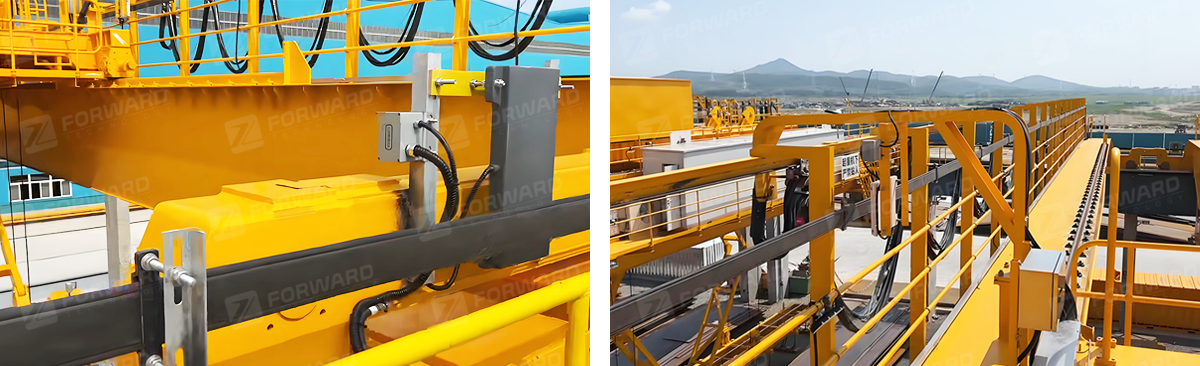
5. Long-Range Measurement Capability
Gray Code systems are ideally suited for applications like port cranes that require precise positioning over large areas (hundreds or even thousands of meters of track). The cable can be easily laid in sections to cover the entire crane operating range.
6. Reduced Long-Term Maintenance Costs
While initial installation requires laying the Gray Code cable, its non-contact nature results in very low maintenance. The cable itself requires almost no maintenance, and the detection units are highly durable. Compared to other technologies needing regular calibration (optical systems), susceptible to environmental factors (dirty lenses), mechanical wear (encoders), or metal interference (UWB), Gray Code often offers a lower total cost of ownership over the long term.
In conclusion, the Gray Code positioning system is a key technological enabler for the efficient, safe, and reliable operation of modern large-scale port cranes, especially in automated or semi-automated terminals. It plays an indispensable role in enhancing the overall operational efficiency and competitiveness of a port.


